
Children playing on swings at a playground. Playground equipment is often painted with lead paint. Deteriorating lead paint is a source of exposure to lead.
International Lead Poisoning Prevention Week
18-24 October 2026
About the campaign
The issue
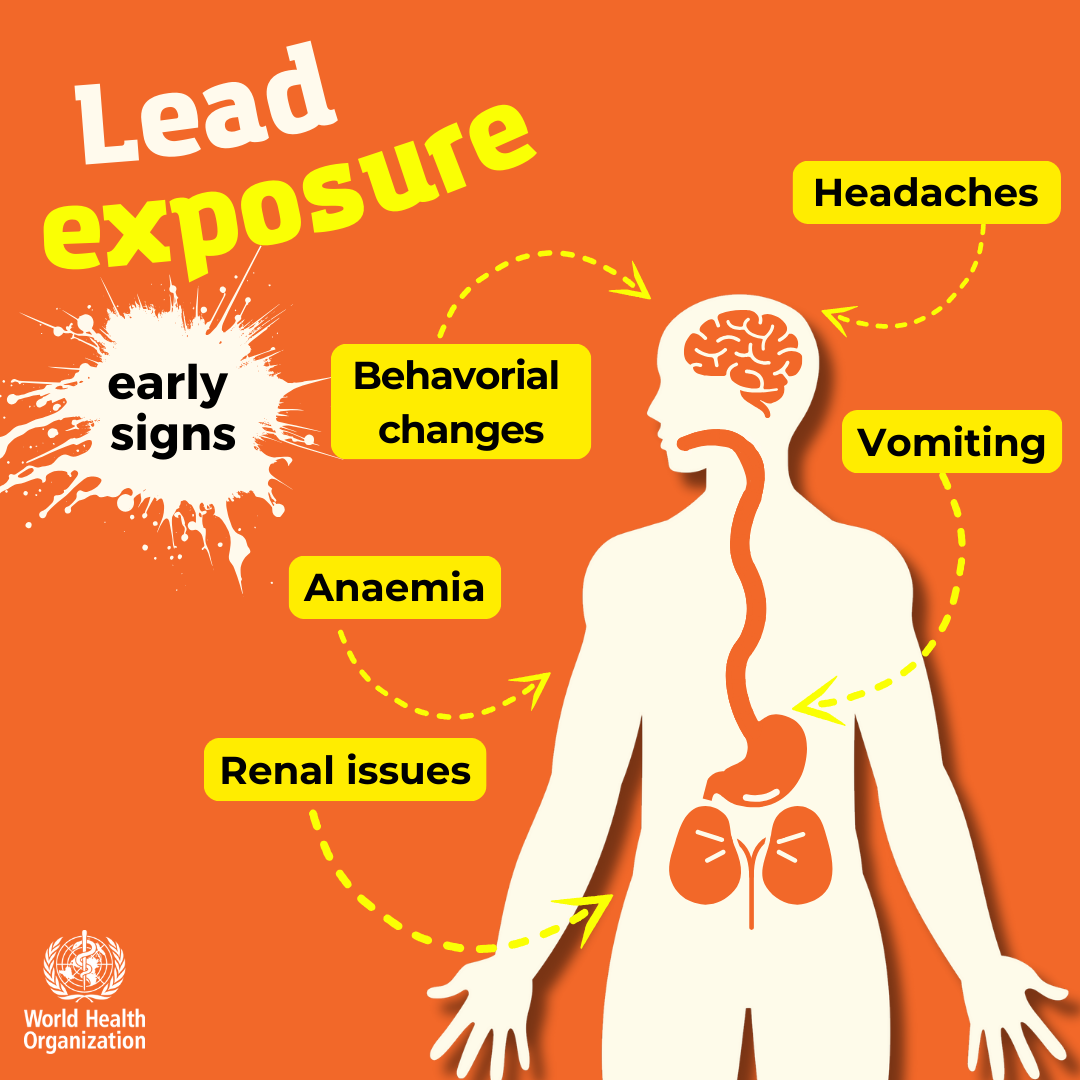
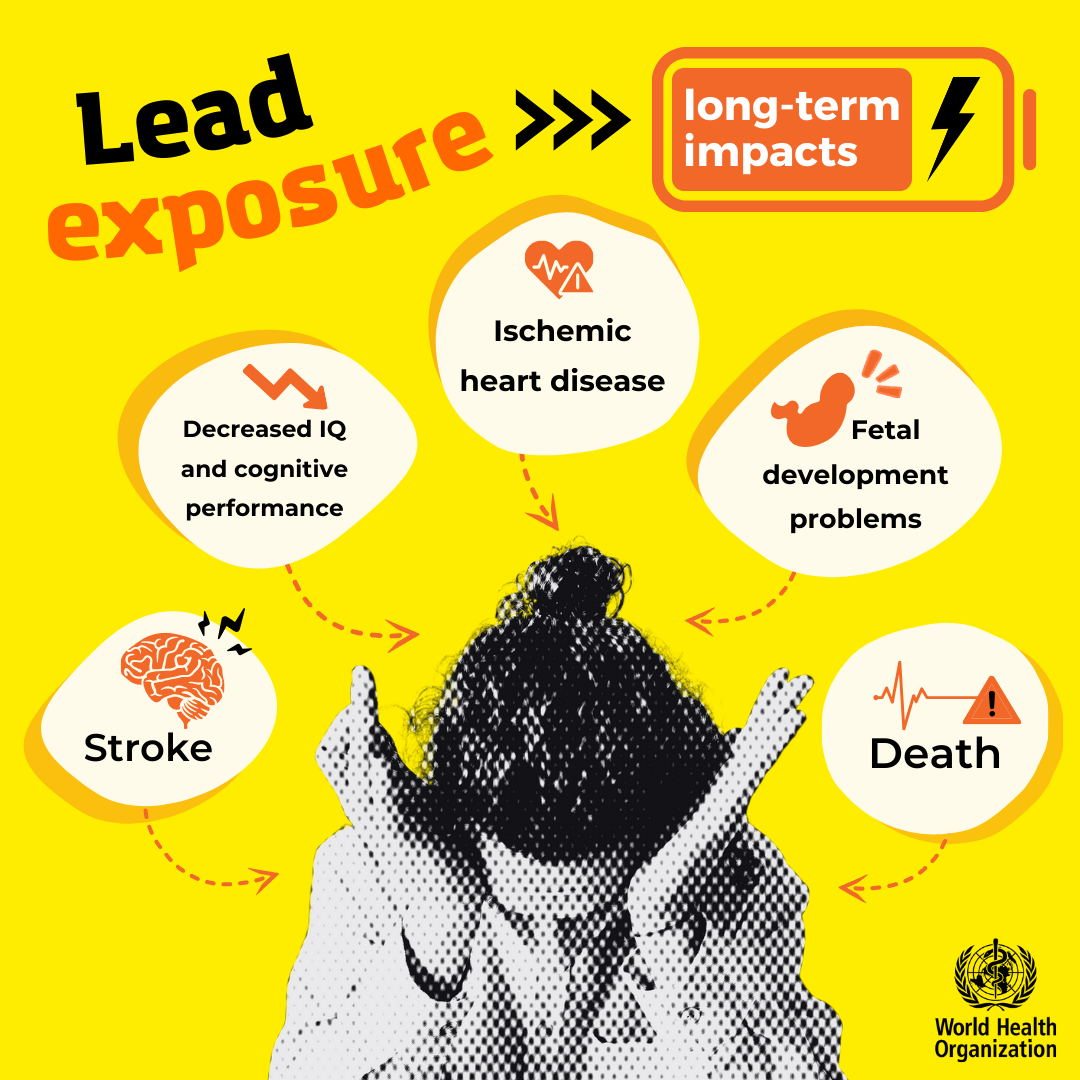
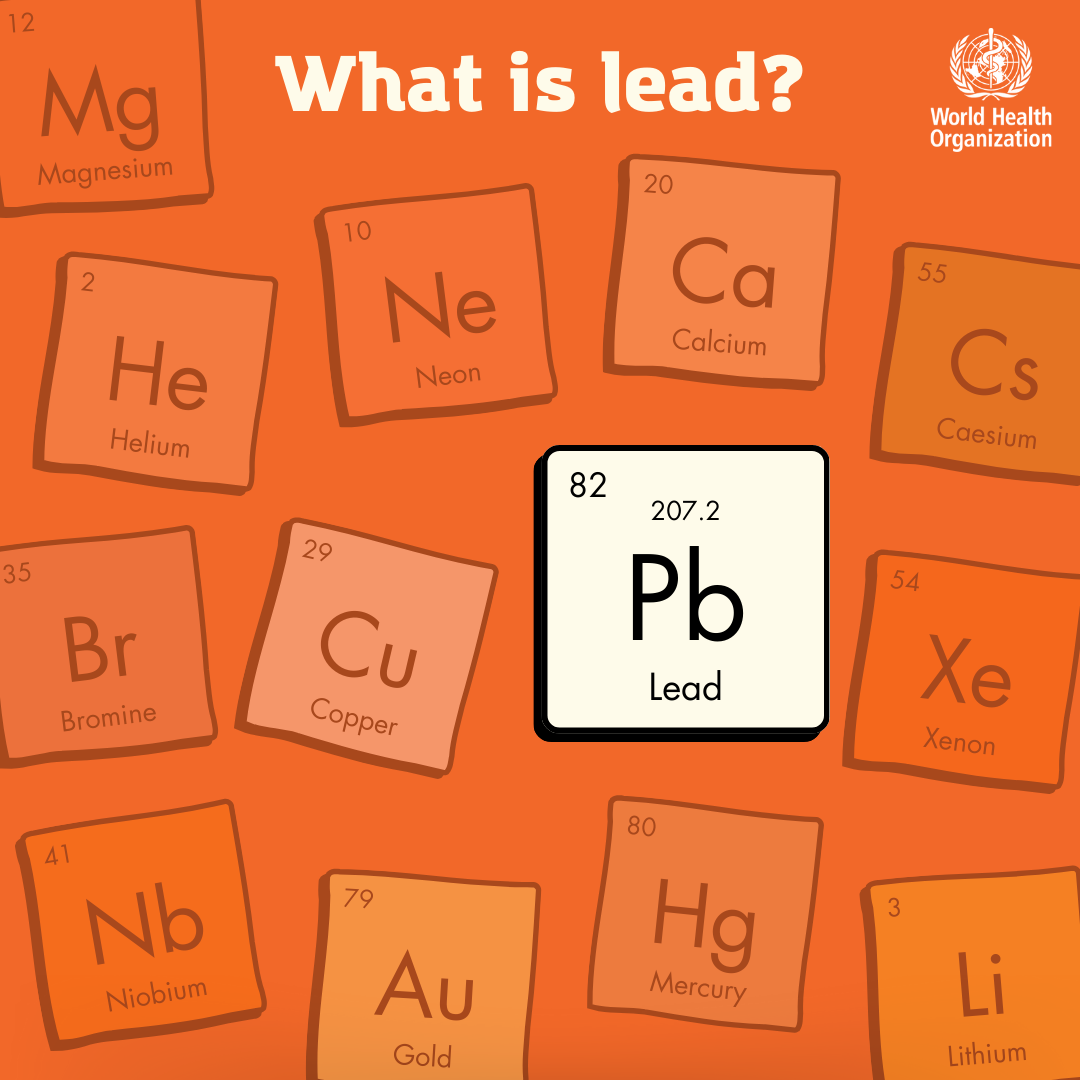
Lead is a well-recognized toxicant that has wide-ranging health impacts, in particular affecting the neurological, cardiovascular, renal, gastrointestinal and haematological systems. Young children are particularly vulnerable as they have unique pathways that can lead to higher exposures than adults. In addition, lead can lead to irreversible damage to the developing brain that may result in health outcomes that last a lifetime, such as reduced intellectual ability. The Institute for Health Metrics Evaluation’s (IHME) latest data estimate that more than 3.5 million deaths globally were attributed to lead exposure in 2023, primarily due to cardiovascular effects. Additionally, lead exposure was estimated to account for more than 71 million years lost to disability (disability-adjusted life years, or DALYs) worldwide in 2023.
Despite widespread recognition of the harmful effects of lead and actions in many countries, exposure to lead, particularly during childhood, remains a key concern for health care providers and public health officials worldwide.
Important sources of lead exposure include environmental contamination from mining, smelting, manufacturing and recycling activities, and the use of lead in a wide-range of consumer products. The majority of global lead consumption is used in the manufacture of lead-acid batteries for motor vehicles. Other products containing lead include pigments, paints, solder, stained glass, lead crystal glassware, ammunition, ceramic glazes, jewellery, toys, some common electrical and electronic items, some cosmetics such as kohl and sindoor, contaminated spices and traditional medicines used in countries such as India, Mexico and Viet Nam. Drinking water may also be a source of lead exposure, due to leaching from pipes or other lead-containing materials in water systems, or from lead being present in the water source itself, originating from the bedrock or pollution.
The campaign
International Lead Poisoning Prevention Week (ILPPW) takes place annually during October. The theme this year is "From Detection to Prevention".
The aims are:
- raise awareness about the health effects of lead exposure;
- highlight global efforts to prevent lead exposure, particularly in children; and
- urge countries to eliminate lead paint through regulation.
Governments, civil society organizations, health partners, and other stakeholders are invited to join the campaign by using and sharing the official materials available on the campaign website. A wide range of resources is provided to support national and local activities.
Partners are encouraged to organize events, raise awareness, and to showcase global action during the week.
Together, we can end lead exposure.
Hashtags: #BanLeadPaint #LeadPoisoning

Strategies to eliminate lead
Phasing out lead paint: eliminate non-essential uses, adopt legally binding bans, and promote safe recycling.
Protecting vulnerable groups: reduce exposures in children and women of child-bearing age; monitor blood lead levels to guide interventions
Educate the public: educate the public on safe disposal and recycling of lead-acid batteries and electronics.
All Member States are encouraged to phase-out the use of lead paint as a key national action under the WHO Chemicals Road map.
The Global Alliance to Eliminate Lead Paint (the Alliance) led by WHO and UNEP since 2011 supports the enactment of legally-binding measures to phase-out the manufacture, import, export, distribution, sale and use of lead paints in every country.
Lead exposure is preventable.
We all need to take action to protect children, communities and the environment.
Publications
More →Exposure to lead: a major public health concern: preventing disease through healthy environments, 4th...
Lead is a toxic metal whose widespread use has caused extensive environmental contamination and health problems in many parts of the world. It is a cumulative...
Guideline for clinical management of exposure to lead
The purpose of the WHO Guideline for clinical management of exposure to lead is to assist physicians in making decisions about the diagnosis and treatment...
Global elimination of lead paint: why and how countries should take action - Policy brief
Lead has toxic effects on almost all body systems and is especially harmful for children and pregnant women. Lead paint is an avoidable source of...